Seb’s Story: Building trust, one step at a time
When Seb first began working with Pathways, trust didn’t come easily.
In his late 30s, Seb had experienced 13 years of rough sleeping. He is registered blind and lives with a number of physical and mental health challenges, alongside alcohol dependency. His experiences had made it difficult for him to trust professionals and agencies, and when frustrated or under the influence of alcohol, his behaviour could sometimes become aggressive.
In January 2026, our Recovery Worker Paul began working closely with Seb. Rather than expecting immediate change, Paul focused on building a relationship and being someone Seb could rely on.
Paul supported Seb to attend important eye appointments in Sheffield, with a view to surgery to improve his vision. He also helped him access support from the Law Centre ahead of a court hearing. The case was ultimately dismissed due to a lack of evidence — an outcome that may have been very different without the support received.
Then, just weeks before his planned eye surgery, Seb was seriously assaulted while on the streets, resulting in a badly broken leg. Thankfully, amputation was avoided, but he spent several weeks in hospital. Paul maintained the relationship and continued to visit and call him regularly.
Sometimes support meant helping with appointments and practical arrangements. Sometimes it simply meant providing a familiar, cheerful voice during a difficult period. Paul also brought Seb clothing and toiletries so that he didn’t have to remain in a hospital gown.
Being in hospital meant that access alcohol was difficult so after experiencing withdrawal, he began to recognise some of the benefits of sobriety. He became more positive about his future and began rebuilding a relationship with his mother, someone he had barely spoken to for years.
Paul also worked between the hospital and the eye hospital in Sheffield to make sure Seb could attend his surgery. The operation restored some of his vision, helping to reduce his vulnerability.
Without Paul’s ongoing support, keeping track of the appointments and pre-operative requirements would have been extremely difficult, and the surgery may not have gone ahead.
While Seb remained in hospital, Paul also worked with the council and social services to arrange temporary accommodation for his discharge and ensure appropriate support was in place while he recovered in a full leg cast.
A wheelchair was secured for Seb, and during the first few weeks after leaving hospital, Paul spent time supporting him around town and helping him make the most of his sobriety. Together, they also worked on his benefits and banking and explored options for longer-term housing, including a potential direct-match council property when suitable supported accommodation could not be found.
Sadly, around three months after his injury, Seb began drinking again. This led to the loss of his temporary accommodation and a setback in his engagement with the council.
He continued working with Paul for another month before eventually disengaging from the more intensive support.
That isn’t the end of Seb’s story.
He continues to attend the Pathways drop-in service for supplies and the rough sleeper breakfast. The door remains open for him to return to more intensive support when he is ready.
There have been setbacks, but there has also been significant progress.
Some of the barriers that once seemed impossible to overcome have been reduced or removed. Seb has experienced what stability, sobriety, improved health and support can look like — and that experience matters.
He remains extremely vulnerable while sleeping rough, but he is in a better position than he was before Paul began working with him.
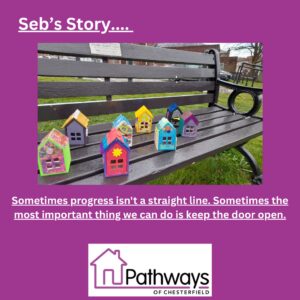
Sometimes progress isn’t a straight line. Sometimes the most important thing we can do is keep the door open.